
Daytona Beach Family Law Attorneys
Family Law Guidance for Divorce, Parenting & Financial Matters
Beginning a divorce or family law dispute can leave you uncertain about what to do next. At Buckmaster & Ellzey, our family lawyers in Daytona Beach can explain your options and prepare you for the legal process ahead.
Family law disputes can involve parenting arrangements, financial responsibilities, property, and family relationships at the same time. We recognize the emotional strain involved in these matters and provide clear guidance as you evaluate the next steps.
Get more information about our Daytona Beach family law services by calling (888) 785-6548 now.
Our Family Law Services in Daytona Beach
A family law matter may involve one issue or several connected issues arising from the same divorce or family dispute. The documents involved, the presence of children, and the stage of the case can all affect how a matter proceeds.
We can handle a wide variety of family law matters, such as:
- Adoption: We provide legal guidance through adoption proceedings, including the required filings and court procedures.
- Alimony: We represent clients seeking alimony or responding to a request for support.
- Child Custody: We help clients address parenting plans and time-sharing arrangements involving their children.
- Domestic Violence: We represent people seeking protection in domestic violence matters and people responding to domestic violence allegations.
- Mediation: We help clients prepare for family mediation, a confidential process in which a neutral mediator assists the parties with resolving disputed issues.
- Modifications: We assist with family court modifications when a client needs to ask the court to change an existing order.
- Prenuptial Agreements: We prepare and review prenuptial and postnuptial agreements for clients considering financial arrangements before or during marriage.
- Property Division: We address the division of marital property, assets, and debts under Florida’s equitable distribution framework.
Understanding Florida’s Family Law Statutes
Florida’s family law statutes govern dissolution of marriage, parenting plans, time-sharing, child support, alimony, and property division. At least one spouse must have resided in Florida for six months before filing for dissolution of marriage.
Florida’s equitable distribution framework distinguishes marital assets and liabilities from nonmarital assets and liabilities. It generally begins with an equal-distribution premise, although a court can consider statutory factors that may support a different distribution based on the evidence in the case.
Our family law attorneys in Daytona Beach help clients understand the legal issues, documents, and financial information that may matter in their circumstances. The effect of income, debt, property ownership, relocation, or a child’s needs depends on the applicable law and the facts presented.
The Family Law Process in Daytona Beach
Family law cases in Daytona Beach are handled within Florida’s Seventh Judicial Circuit, which serves Volusia County. Many family-law matters are heard at the Steven C. Henderson Judicial Center. While every case is different, divorce, paternity, child support, and post-judgment modification matters often follow a similar procedural path.
- Step 1: Filing the Petition and Addressing Initial Issues: A family law case begins when one party files a petition with the Clerk of Court. Depending on the case type and current court orders, the court may address temporary issues while the case is pending.
- Step 2: Service of Process and Response: The other party must be formally served with the petition. A respondent generally has 20 days after service to file an answer, although deadlines can vary based on the filing and procedural circumstances. If no response is filed, the case may proceed by default.
- Step 3: Financial Information and Case Preparation: The parties may need to exchange required financial information and documents. This information can be important when the case involves support, property, debt, or other financial responsibilities.
- Step 4: Mediation: Family mediation gives the parties an opportunity to work with a neutral mediator on disputed issues. The Seventh Judicial Circuit offers a family mediation program for qualifying cases with combined incomes below $100,000; other cases may be directed to certified private mediators. If issues remain unresolved, the court decides them.
- Step 5: Parenting Requirements When Applicable: Cases involving minor children may require participation in a Parent Education and Family Stabilization Course. Whether the course applies and when it must be completed depends on the case and current court requirements.
- Step 6: Final Resolution: A case may conclude through an agreement, mediation, or trial followed by a final judgment. We represent clients through negotiated resolutions and court proceedings in family-law matters.
How Our Daytona Beach Family Lawyers Prepare & Present Your Case
At Buckmaster & Ellzey, our attorneys have more than 40 years of combined legal experience. We provide personalized representation and develop strategies tailored to each client’s circumstances. Jeremy Buckmaster has been a Florida Supreme Court Certified Family Mediator since 2015, bringing relevant mediation knowledge to family-law discussions.
We organize facts and documents, prepare clients for mediation, and present their positions in court when necessary. Contact us today to schedule a consultation and discuss the legal questions involved in your family-law matter.
We also serve clients in Port Orange, DeLand, Flagler, and West Volusia.
Frequently Asked Questions
What Should I Bring to a Family Law Consultation?
Bring any court papers, agreements, financial records, tax returns, pay information, and documents related to property or debts that may apply to your situation. If children are involved, bring information about current parenting arrangements and expenses. The documents needed depend on the issues involved, so it’s helpful to gather what is available before the consultation.
How Is Child Support Calculated in Volusia County?
Child support in Volusia County is calculated under Florida statutory guidelines. The calculation generally considers each parent’s income, the number of overnight stays each parent has with the child, and certain costs such as health care and child care. The facts and financial information in a particular case affect the calculation.
Can Family Court Orders Be Modified?
Yes, a party may ask the court to modify parenting, support, or other family-law orders when there has been a substantial change in circumstances and the legal standard for modification is met. Examples may include a significant income change, relocation, or changed circumstances affecting a child. The appropriate request and supporting evidence depend on the order at issue.
Get personalized guidance for your divorce or related family law dispute from our Daytona Beach family lawyers. Call (888) 785-6548 or use an online contact form to connect with Buckmaster & Ellzey today.
Frequently Asked Questions
-
What Is the “Child’s Best Interests” Standard in a Child Custody Case?Child custody cases in Florida are determined by the best interests of the child. As a general rule, the courts hold that ongoing and frequent contact with each parent is a child’s best interest. However, this is not necessarily the case if a judge has reason to believe that contact with one or both of the parents could be to the child’s detriment. To determine the best interest of a child, the court considers several factors, including the health and safety of the child, the child’s emotional and developmental needs, the moral fitness of the parents, as well as the ability of the parents to communicate and co-parent. Having examined these factors, the court will make a decision about the type of custody arrangement and parenting plan that is best for the child.
-
What Are the Benefits of Divorce Mediation?Mediation is the process in which a neutral third-party helps couples negotiate the terms of their divorce. Settling divorce disputes through mediation offers several benefits, including: • Reduced costs • Faster results • Greater control • Less stress • Increased convenience • Confidentiality • Preservation of relationships To learn more about the mediation process and whether it is right for you, reach out to our mediators in Daytona Beach today.
-
What Can Enforcements and Injunctions Be Used For?In general, enforcements and injunctions are court orders that demand one party perform or refrain from a particular action. Within family law, injunctions, or restraining orders, are usually issued to protect spouses and children from an abusive spouse or parent. When one party fails to keep the obligations of a family court order, the other party may request an enforcement to ensure that the order is upheld. Enforcement proceedings are commonly used when one party fails to keep the terms of their: • Alimony agreements • Child support payments • Child custody arrangements • Property division settlements • Modification orders • Visitation agreements
-
What Is Domestic Violence?Domestic violence in Florida refers to a variety of abusive behaviors that result in the harm of another individual who is a family or household member. That includes current or former spouses, individuals related by marriage or by blood, those who have previously or are currently residing together, and parents who had a child together. Typical forms of domestic violence in Daytona Beach include: • Stalking • Kidnapping • Sexual assault • Assault • Battery
-
How Are Child Support and Alimony Calculated in Florida?If you are going through a divorce, you may be concerned about how much child support or alimony you can receive or will be expected to pay. Alimony is ordered to ensure that both spouses have an equal opportunity of maintaining the same standard of living they enjoyed during the marriage. The higher-earning spouse makes payments to the lower-earning spouse. The amount of the payment is determined based on one party’s need and the other party’s ability to pay. This involves the consideration of a variety of factors, including the length of the marriage, each party’s contribution to the marriage, and the ability of the unemployed spouse to obtain work. Child support, on the other hand, is determined based on Florida’s statutory guidelines. To calculate a child support payment, the court considers the total income of both parties, minus any deductions. The child support order is ultimately determined by what amount is needed to cover the child’s basic living expenses, including food, shelter, childcare, education, and healthcare.
-
What Is the Difference Between Contested and Uncontested Divorce?There are two types of divorce in Daytona Beach: contested and uncontested divorce. An uncontested divorce is typically preferred because they can usually be completed with far less hassle and in far less time. However, to go through the uncontested divorce process, the couple must reach an agreement on all significant divorce-related issues. These issues include: • Property division • Debt allocation • Alimony • Child support • Child custody • Visitation When there is disagreement over one or more of these issues, the couple will need to go through the contested divorce process. In such cases, the couple will either need to hire a divorce mediator to help them through the negotiation process or have the family court decide for them.
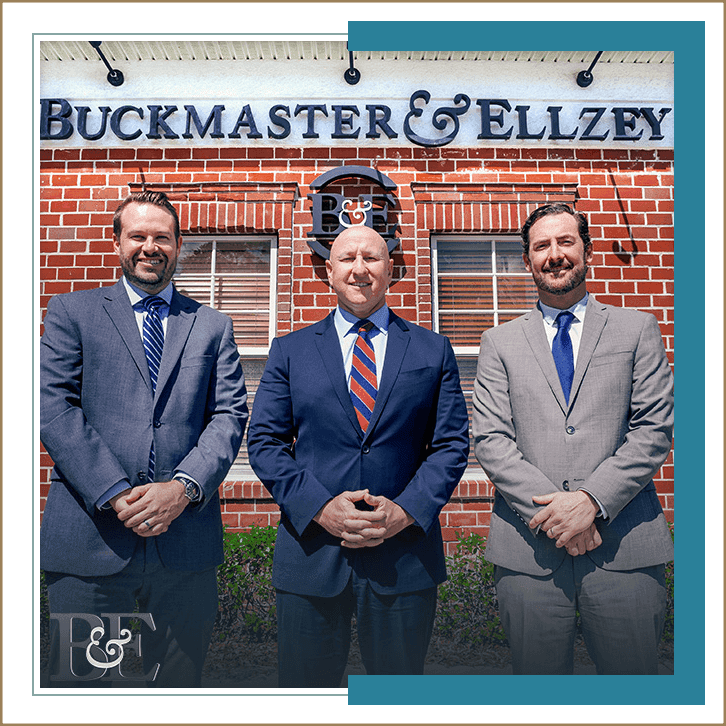

Why Choose Buckmaster & Ellzey?
-
Client-Focused Representation
-
A Team of Compassionate Advocates on Your Side
-
Former State Prosecutor
-
40+ Years of Collective Experience
-
Dedicated Attorneys